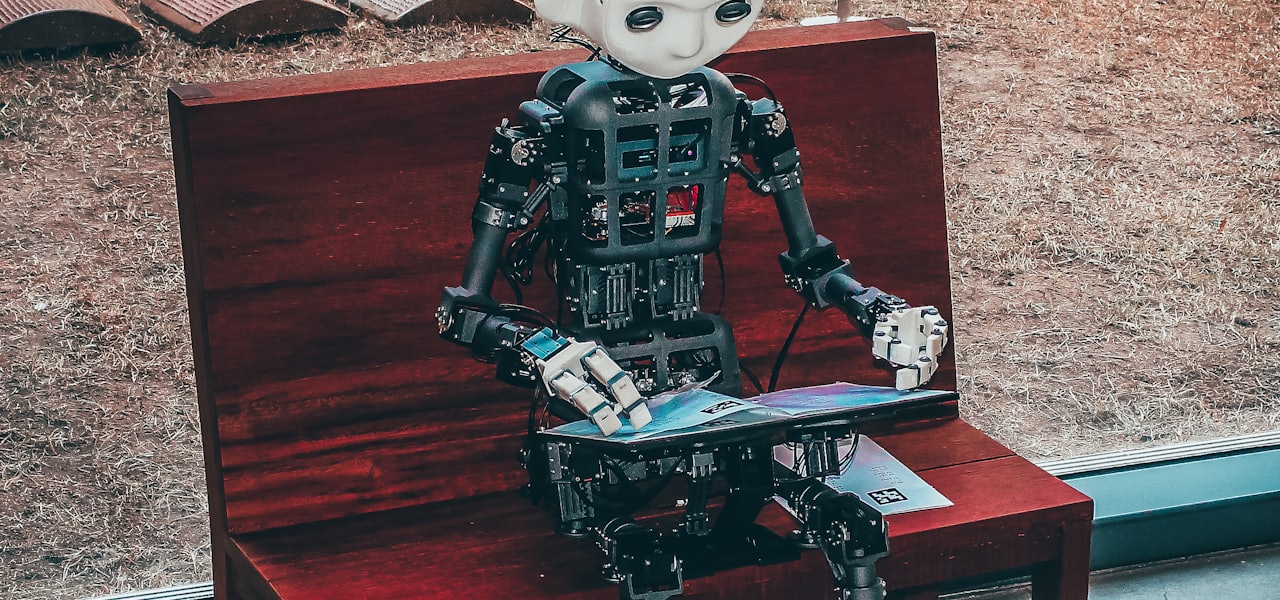
Workplace robotics safety is an aspect of occupational safety and health when robots are used in the workplace. This includes traditional industrial robots as well as emerging technologies such as drone aircraft and wearable robotic exoskeletons. Types of accidents include collisions, crushing, and injuries from mechanical parts. Hazard controls include physical barriers, good work practices, and proper maintenance. == Background == Many workplace robots are industrial robots used in manufacturing. According to the International Federation of Robotics, 1.7 million new robots are expected to be used in factories between 2017 and 2020. Emerging robot technologies include collaborative robots, personal care robots, construction robots, exoskeletons, autonomous vehicles, and drone aircraft (also known as unmanned aerial vehicles or UAVs). Advances in automation technologies (e.g. fixed robots, collaborative and mobile robots, and exoskeletons) have the potential to improve work conditions but also to introduce workplace hazards in manufacturing workplaces. Fifty-six percent of robot injuries are classified as pinch injuries and 44% of injuries are classified as impact injuries. A 1987 study found that line workers are at the greatest risk, followed by maintenance workers, and programmers. Poor workplace design and human error caused most injuries. Despite the lack of occupational surveillance data on injuries associated specifically with robots, researchers from the US National Institute for Occupational Safety and Health (NIOSH) identified 61 robot-related deaths between 1992 and 2015 using keyword searches of the Bureau of Labor Statistics (BLS) Census of Fatal Occupational Injuries research database (see info from Center for Occupational Robotics Research). Using data from the Bureau of Labor Statistics, NIOSH and its state partners have investigated 4 robot-related fatalities under the Fatality Assessment and Control Evaluation Program. In addition the Occupational Safety and Health Administration (OSHA) has investigated robot-related deaths and injuries, which can be reviewed at OSHA Accident Search page. Injuries and fatalities could increase over time because of the increasing number of collaborative and co-existing robots, powered exoskeletons, and autonomous vehicles into the work environment. Safety standards are being developed by the Robotic Industries Association (RIA) in conjunction with the American National Standards Institute (ANSI). On October 5, 2017, OSHA, NIOSH and RIA signed an alliance to work together to enhance technical expertise, identify and help address potential workplace hazards associated with traditional industrial robots and the emerging technology of human-robot collaboration installations and systems, and help identify needed research to reduce workplace hazards. On October 16 NIOSH launched the Center for Occupational Robotics Research to "provide scientific leadership to guide the development and use of occupational robots that enhance worker safety, health, and well being". So far, the research needs identified by NIOSH and its partners include: tracking and preventing injuries and fatalities, intervention and dissemination strategies to promote safe machine control and maintenance procedures, and on translating effective evidence-based interventions into workplace practice. == Hazards == Many hazards and injuries can result from the use of robots in the workplace. Some robots, notably those in a traditional industrial environment, are fast and powerful. This increases the potential for injury as one swing from a robotic arm, for example, could cause serious bodily harm. There are additional risks when a robot malfunctions or is in need of maintenance. A worker who is working on the robot may be injured because a malfunctioning robot is typically unpredictable. For example, a robotic arm that is part of a car assembly line may experience a jammed motor. A worker who is working to fix the jam may suddenly get hit by the arm the moment it becomes unjammed. Additionally, if a worker is standing in a zone that is overlapping with nearby robotic arms, he or she may get injured by other moving equipment. There are four types of accidents that can occur with robots: impact or collision accidents, crushing and trapping accidents, mechanical part accidents, and other accidents. Impact or collision accidents occur generally from malfunctions and unpredicted changes. Crushing and trapping accidents occur when a part of a worker's body becomes trapped or caught on robotic equipment. Mechanical part accidents can occur when a robot malfunctions and starts to "break down", where the ejection of parts or exposed wire can cause serious injury. Other accidents at just general accidents that occur from working with robots. There are seven sources of hazards that are associated with human interaction with robots and machines: human errors, control errors, unauthorized access, mechanical failures, environmental sources, power systems, and improper installation. Human errors could be anything from one line of incorrect code to a loose bolt on a robotic arm. Many hazards can stem from human-based error. Control errors are intrinsic and are usually not controllable nor predictable. Unauthorized access hazards occur when a person who is not familiar with the area enters the domain of a robot. Mechanical failures can happen at any time, and a faulty unit is usually unpredictable. Environmental sources are things such as electromagnetic or radio interference in the environment that can cause a robot to malfunction. Power systems are pneumatic, hydraulic, or electrical power sources; these power sources can malfunction and cause fires, leaks, or electrical shocks. Improper installation is fairly self-explanatory; a loose bolt or an exposed wire can lead to inherent hazards. === Emerging technologies === Emerging robotic technologies can reduce hazards to workers, but can also introduce new hazards. For example, robotic exoskeletons can be used in construction to reduce load to the spine, improve posture, and reduce fatigue; however, they can also increase chest pressure, limit mobility when moving out of the way of a falling object, and cause balance problems. Unmanned aerial vehicles are being used in the construction industry to do monitoring and inspections of buildings under construction. This reduces the need for humans to be in hazardous locations, but the risk of a UAV collision presents a hazard to workers. For collaborative robots, isolation is not possible. Possible hazard controls include collision avoidance systems, and making the robot less stiff to lessen the impact force. Robotic tech vest is a wearable device for humans, worn in Amazon warehouses. == Hazard controls == There are a few ways to prevent injuries by implementing hazard controls. There can be risk assessments at each of the various stages of a robot's development. Risk assessments can help gather information about a robot's status, how well it is being maintained, and if repairs are needed soon. By being aware of the status of a robot, injuries can be prevented and hazards reduced. Safeguarding devices can be implemented to reduce the risk of injuries. These can include engineering controls such as physical barriers, guard rails, presence-sensing safeguarding devices, etc. Awareness devices are usually used in conjunction with safeguarding devices. They are usually a system of rope or chain barriers with lights, signs, whistles, and horns. Their purpose it to be able to alert workers or personnel of certain dangers. Operator safeguards can also be in place. These usually utilize safeguarding devices to protect the operator and reduce risk of injury. Additionally, when an operator is within close proximity of a robot, the working speed of the robot can be reduced to ensure that the operator is in full control. This can be done by placing the robot in the manual or teach mode. It is also crucial to inform the programmer of the robot of what type of work the robot will be doing, how it will interact with other robots, and how it will work in relation to an operator. Proper maintenance of robotic equipment is also critical in order to reduce hazards. Maintaining a robot insures that it continues to function properly, thereby reducing the risks associated with a malfunction. One common safeguard used in industrial settings is the installation of robot safety fencing. These barriers, often made from durable materials such as mesh or polycarbonate, prevent accidental interactions between workers and robotic systems, reducing the risk of injury. Robot safety fencing is particularly important in environments where high-speed or powerful robots are used. == Regulations == Some existing regulations regarding robots and robotic systems include: ANSI/RIA R15.06 OSHA 29 CFR 1910.333 OSHA 29 CFR 1910.147 ISO 10218 ISO/TS 15066 ISO/DIS 13482
Airfair
AirFair was a mobile travel application that checks flights, and shows whether a traveler is owed compensation. == History == AirFair was developed in 2016 by Allay Logic Ltd; a Newcastle-based tech-company. == Services == AirFair offered a free flight check to see if compensation is owed. The app could indicate how much the person is owed within minutes whether the flight was delayed, cancelled or the traveler is refused boarding.
Dreams of Violets
Dreams of Violets is a film entirely generated by artificial intelligence, produced and directed by brothers Ash and Pooya Koosha. The film will be screened at the Tribeca Film Festival on 10 June 2026. All images and characters in the film were generated using AI-powered video tools and based on journalistic reports, photographs, and eyewitness accounts. == Plot == The film is a fictionalized dramatization of the events surrounding the massacre of Iranian civilians in January 2026. International organizations estimate the death toll at over 7,000, amidst protests and state violence that unfolded during a communications blackout.
Digital fashion
Digital fashion is a field of fashion design that relies on 3D software or artificial intelligence to produce hyper-realistic, data-intensive digital 3D garment simulations that are digital-only products or digital models for physical products. Digital garments can be worn and presented in virtual environments, social media, online gaming, virtual reality (VR), and augmented reality (AR) platforms. The field aims to contribute to the development of a more sustainable future for the fashion industry. It has been praised as a possible answer to ethical and creative concerns of traditional fashion by promoting innovation, reducing waste, and encouraging conscious consumption. However, empirical research has questioned whether digital fashion communities embody the radical and anti-consumerist values they claim. A 2025 study presented by YeSeung Lee at the FACTUM international conference on fashion communication analysed 88,141 posts across nine platforms over eight months using Pulsar. It found that only 4.8% of author biographies indicated any sociopolitical focus, and that discourse predominantly relied on generic slogans and trending buzzwords, primarily reinforcing existing fashion hierarchies and consumerist frameworks rather than challenging them. Digital fashion is also the interplay between digital technology and couture. Human AI is an intersection of technology and human representation, in which human value is emphasized and enhanced by technology and the possibilities of discovering design. Information and communication technologies (ICTs) have been deeply integrated both into the fashion industry, as well as within the experience of clients and prospects. Such interplay has happened at three main levels. ICTs are used to design and produce fashion products, while the industry organization also leverages digital technologies. ICTs impact marketing, distribution and sales. ICTs are extensively used in communication activities with all relevant stakeholders and contribute to co-create the fashion world. The fashion industry in general has paved the way for digital fashion to be introduced with more technology being in the industry, like virtual dressing rooms and the gamification of the fashion industry. Digital fashion is also seen on many different online fashion retail websites. This evolution in the fashion industry has called for more education and research of digital fashion. == Design, production, and organization == Among the many applications available to fashion designers to model the fusion of creativity with digital avenues, the Digital Textile Printing can be mentioned here. === Digital textile printing === Digital textile printing has brought together the worlds of fashion, technology, art, chemistry, and printing to produce a new process for printing textiles on clothing. Digital printing is a process in which prints are directly applied to fabrics with a printer, reducing 95% of the use of water, 75% of the use of energy and minimizing textile waste. The main advantage of digital printing is the ability to do very small runs of each design (even less than 1 yard). Digital Textile printing also offers other benefits, such as fast printing speeds that help the time and space needed to print different patterns on garments of choice. == Marketing, distribution, and sales == While all digital channels can be used in order to market and sell fashion completely online (eCommerce), they usually are implemented in connection with offline channels (so-called "omni-channel"). Here, virtual and augmented reality play a crucial role. The fashion industry has faced its own problems including pollution and fabric waste, which has resulted in a shift to more sustainable methods like digital fashion. The industry is also constantly being intertwined with digital media and has allowed for the use of digital tools within the business itself and with consumers. Two of the ways digital fashion is utilized with consumers is through virtual dressing rooms and virtual cosmetic counters. Prospects and clients can use ICTs - own computers, tablets and smartphones - to virtually simulate fitting rooms and cosmetics counters and see how they look in specific outfits and makeup. Customers can give any look and decide on what suits them and buy products. Oftentimes, beauty retailers will feature virtual fitting rooms to allow users to experience the look of their product before committing to a purchase. Some examples are color contact retailers Freshlook, which allows users to simulate contact lens wear in their color contacts studio before purchase. Colorful Eyes also offers a virtual color contact lens try-on room. === Virtual dressing room === A virtual dressing room (also often referred to as virtual fitting room and virtual changing room although they do perform different functions) is the online equivalent of the near-ubiquitous in-store changing room – that is, it enables shoppers to try on clothes to check one or more of size, fit or style, but virtually rather than physically. Fashion retailer Topshop installed a Kinect-powered virtual fitting room at its Moscow store. Created by AR Door, the Augmented Fitting Room system overlays 3D augmented reality clothes on the customer. Simple gestures and on-screen buttons let users "try on" different outfits. However, the high variability of virtual fit platforms to predict consumer clothes sizes called into question the accuracy of these systems in their current form. AI-powered Wardrobe and Outfit Planning Beyond virtual fitting rooms, the integration of artificial intelligence has enabled the rise of digital wardrobe management. These platforms use computer vision and machine learning to catalog a user’s physical or digital garments, providing automated outfit recommendations based on weather, occasion, and personal style trends. Fashion-tech startups utilize AI-driven garment simulation to help users plan outfits virtually, bridging the gap between digital-only fashion and physical wardrobe utility. This "smart closet" approach aims to reduce "wardrobe fatigue" and decrease unnecessary consumption by maximizing the use of existing items through digital visualization. === Communication and experience co-creation === Fashion is also a matter of socially negotiating what is "in" or "out", fashionable or not. In other words, fashion items do not only play on the economic market of physical goods but also - and sometimes even more importantly - on the semiotic market of the production of social tastes and customs. Thanks to social media, and to all services offered by the so-called web2.0, laypeople can contribute to co-create the fashion world, shaping tastes, customs, and fashion-related values. Social media, in general, has catapulted the impact fashion has on our everyday lives and values. Fashion has taken a central role in mass production and is constantly evolving due to the ever-lasting digital transformation. Social media has also helped evolve to a point where not only can brands reach consumers, but consumers can reach brands as well. TikTok for example started a trend in 2020 with #GucciModelChallenge. This creates a space where the brand is gaining awareness from their consumers in the ever-changing digital age. === Gamification === Gaming has played an important role in fostering digital aspects of the fashion world, first beginning with dress-up games that used avatars and allowed players to select garments. Nevertheless, it seems it will now move on to the real world and start using avatars of real people. Garments from luxurious brands have been copied and adapted into the aesthetics of games such as Animal Crossing: New Horizons and The Sims. As to the former, during COVID-19 lock-downs players recreated outfits from a variety of fashion brands, including Chanel, Gucci and Versace. It became a platform for users to showcase their costume designs. In April 2019, Moschino collaborated with simulation game The Sims in a capsule collection that featured signature Jeremy Scott garments. The collection was made available to shop and the campaign was set against the backdrop of a Sims-like atmosphere. Furthermore, in May 2019, Nike partnered up with Fortnite to include their iconic Jordan sneakers. In similar fashion, in May 2020, Marc Jacobs designed 6 of the brand's favorite looks for Nintendo's Animal Crossing: New Horizons in a partnership with Instagram user @AnimalCrossingFashionArchive. They were made available to download. Similarly, the other luxury brands mentioned, Louis Vuitton partnered with game League of Legends to create skins for characters within the game. Digital fashion in different video games allows users to express themselves beyond their avatars and combine the self-expression of fashion into the digital gaming realm. == Digital fashion education and research == Nowadays, the fashion industry needs experts in digital fashion, equipped with the above-ske
Alice and Sparkle
Alice and Sparkle is a 2022 illustrated children's book published by American technology product designer Ammaar Reshi. Reshi created the book using artificial intelligence programs ChatGPT and Midjourney in one weekend, which sparked controversy among artists, both in regard to the copyright status of the book and the quality of the illustration and text. == Plot == A girl named Alice discovers a group of magical and benevolent artificial intelligence beings. She knows that artificial intelligence is powerful, and that it has the power to do good and evil depending on how it is used. One day, she creates her own artificial intelligence and names it Sparkle. Sparkle helps Alice with her homework and plays with her, and they quickly become good friends. However, Sparkle soon grows more powerful and begins to make its own decisions, which makes Alice both proud and scared. She knows that it is her responsibility to guide Sparkle to do good, not evil. Together, Alice and Sparkle use their knowledge to make the world a better place and to teach people about the power of artificial intelligence. The two live happily ever after, spreading the magic of artificial intelligence. == Structure == Including the dedication and postscript, the book contains twenty four pages, about half of which being illustrations provided by Midjourney. The very short story, composed of text generated by ChatGPT, contains 343 words. Some of the illustrations are accompanied by descriptions, at least one of which was provided by Reshi. Both Alice's and Sparkle's appearances change significantly between illustrations, although Alice's is more consistent. Reshi said Midjourney was unable to generate consistent images of Sparkle, so he had to include a line in the book saying that it could turn "into all kinds of robot shapes". == Creation == When reading a children's book to his friend's daughter, Ammaar Reshi "decided he wanted to write his own". He had no experience with creative writing or illustration, so instead used the chatbot ChatGPT to write the story for him and used the image generation software Midjourney to illustrate it. On December 4, 2022, 72 hours after having the idea for the book, he published it on Amazon's digital bookstore, and published a paperback version the following day. == Controversy == On December 9, 2022, Reshi made a thread on Twitter about his experience publishing the book, which soon went viral. Reshi received heavy backlash from artists with concerns over the ethics of art generated by artificial intelligence. He also received death threats and messages encouraging self-harm because of his publication. Many writers and illustrators criticized both the creation process and the product itself, claiming that if artificial intelligence programs such as Midjourney are trained on existing illustrations, then the original artists should be financially compensated for derivative works such as Alice and Sparkle. The book was temporarily removed from Amazon in January 2023 because of "suspicious review activity", caused by a high volume of both five-star and one-star reviews.
CloudSim
CloudSim is a framework for modeling and simulation of cloud computing infrastructures and services. Originally built primarily at the Cloud Computing and Distributed Systems (CLOUDS) Laboratory, the University of Melbourne, Australia, CloudSim has become one of the most popular open source cloud simulators in the research and academia. CloudSim is completely written in Java. The latest version of CloudSim is CloudSim v6.0.0-beta on GitHub. Cloudsim is suitable for implementing simulations scenarios based on Infrastructure as a service as well as with latest version Platform as a service, so get started here == CloudSim extensions == Initially developed as a stand-alone cloud simulator, CloudSim has further been extended by independent researchers. GPUCloudSim is an enhanced CloudSim tool for modeling GPU-based cloud infrastructures and data centers. It offers simulations for multi-GPU setups, customizable GPU policies, GPU remoting, etc. It also examines performance impacts and interactions within virtualized GPU environments. CloudSim Plus is a totally re-engineered CloudSim fork providing general-purpose cloud computing simulation and exclusive features such as: multi-cloud simulations, vertical and horizontal VM scaling, host fault injection and recovery, joint power- and network-aware simulations and more. Though CloudSim itself does not have a graphical user interface, extensions such as CloudReports offer a GUI for CloudSim simulations. CloudSimEx extends CloudSim by adding MapReduce simulation capabilities and parallel simulations. Cloud2Sim extends CloudSim to execute on multiple distributed servers, by leveraging Hazelcast distributed execution framework. RECAP DES extends the CloudSim Plus framework to model synchronous hierarchical architectures (such as ElasticSearch). ThermoSim extends CloudSim toolkit by incorporating thermal characteristics, and uses Deep learning-based temperature predictor for cloud nodes.
Evolving intelligent system
In computer science, an evolving intelligent system is a fuzzy logic system which improves the own performance by evolving rules. The technique is known from machine learning, in which external patterns are learned by an algorithm. Fuzzy logic based machine learning works with neuro-fuzzy systems. Intelligent systems have to be able to evolve, self-develop, and self-learn continuously in order to reflect a dynamically evolving environment. The concept of Evolving Intelligent Systems (EISs) was conceived around the turn of the century with the phrase EIS itself coined for the first time by Angelov and Kasabov in a 2006 IEEE newsletter and expanded in a 2010 text. EISs develop their structure, functionality and internal knowledge representation through autonomous learning from data streams generated by the possibly unknown environment and from the system self-monitoring. EISs consider a gradual development of the underlying (fuzzy or neuro-fuzzy) system structure and differ from evolutionary and genetic algorithms which consider such phenomena as chromosomes crossover, mutation, selection and reproduction, parents and off-springs. The evolutionary fuzzy and neuro systems are sometimes also called "evolving" which leads to some confusion. This was more typical for the first works on this topic in the late 1990s. == Implementations == EISs can be implemented, for example, using neural networks or fuzzy rule-based models. The first neural networks which consider an evolving structure were published in. These were later expanded by N. Kasabov and P. Angelov for the neuro-fuzzy models. P. Angelov introduced the evolving fuzzy rule-based systems (EFSs) as the first mathematical self-learning model that can dynamically evolve its internal structure and is human interpretable and coined the phrase EFS. Contemporarily, the offline incremental approach for learning an EIS, namely, EFuNN, was proposed by N. Kasabov. P. Angelov, D. Filev, N. Kasabov and O. Cordon organised the first IEEE Symposium on EFSs in 2006 (the proceedings of the conference can be found in). EFSs include a formal (and mathematically sound) learning mechanism to extract it from streaming data. One of the earliest and the most widely cited comprehensive survey on EFSs was done in 2008. Later comprehensive surveys on EFS methods with real applications were done in 2011 and 2016 by E. Lughofer. Other works that contributed further to this area in the following years expanded it to evolving participatory learning, evolving grammar, evolving decision trees, evolving human behaviour modelling, self-calibrating (evolving) sensors (eSensors), evolving fuzzy rule-based classifiers, evolving fuzzy controllers, autonomous fault detectors. More recently, the stability of the evolving fuzzy rule-based systems that consist of the structure learning and the fuzzily weighted recursive least square parameter update method has been proven by Rong. Generalized EFS, which allow rules to be arbitrarily rotated in the feature space and thus to improve their data representability, have been proposed in with significant extensions in towards 'smartness' of the rule bases (thus, termed as "Generalized Smart EFS"), allowing more interpretability and reducing curse of dimensionality. The generalized rule structure was also successfully used in the context of evolving neuro-fuzzy systems. Several facets and challenges for achieving more transparent and understandable rule bases in EFS have been discussed by E. Lughofer in. EISs form the theoretical and methodological basis for the Autonomous Learning Machines (ALMA) and autonomous multi-model systems (ALMMo) as well as of the Autonomous Learning Systems. Evolving Fuzzy Rule-based classifiers, in particular, is a very powerful new concept that offers much more than simply incremental or online classifiers – it can cope with new classes being added or existing classes being merged. This is much more than just adapting to new data samples being added or classification surfaces being evolved. Fuzzy rule-based classifiers are the methodological basis of a new approach to deep learning that was until now considered as a form of multi-layered neural networks. Deep Learning offers high precision levels surpassing the level of human ability and grabbed the imagination of the researchers, industry and the wider public. However, it has a number of intrinsic constraints and limitations. These include: The "black box", opaque internal structure which has millions of parameters and involves ad hoc decisions on the number of layers and algorithm parameters. The requirement for a huge amount of training data samples, computational resources (usually requiring GPUs and/or HPC) and time (usually requiring many hours of training). Iterative search. Requires retraining for new situations (is not evolving). Does not have proven convergence and stability. Most, if not all, of the above limitations can be avoided with the use of the Deep (Fuzzy) Rule-based Classifiers, which were recently introduced based on ALMMo, while achieving similar or even better performance. The resulting prototype-based IF...THEN...models are fully interpretable and dynamically evolving (they can adapt quickly and automatically to new data patterns or even new classes). They are non-parametric and, therefore, their training is non-iterative and fast (it can take few milliseconds per data sample/image on a normal laptop which contrasts with the multiple hours the current deep learning methods require for training even when they use GPUs and HPC). Moreover, they can be trained incrementally, online, or in real-time. Another aspect of Evolving Fuzzy Rule-based classifiers has been proposed in, which, in case of multi-class classification problems, achieves the reduction of class imbalance by cascadability into class sub-spaces and an increased flexibility and performance for adding new classes on the fly from streaming samples.